The match lasts 90 minutes. Your matchday doesn't.
Archangel is live at Watford Football Club, watching matchday on the cameras the club already owns. From the first queue at the turnstiles to the last fan on the concourse, every camera becomes a pair of eyes that never looks away.
In one line
Archangel is AI behaviour detection for stadiums and sports grounds. It runs on the existing camera estate, watches every feed at once across the whole matchday, and alerts the safety team in seconds when crowd pressure, aggression, a person down or an unattended item starts to form. Live at Watford Football Club, with further UK clubs deploying now.
01 · The problem
Why is matchday so hard to watch?
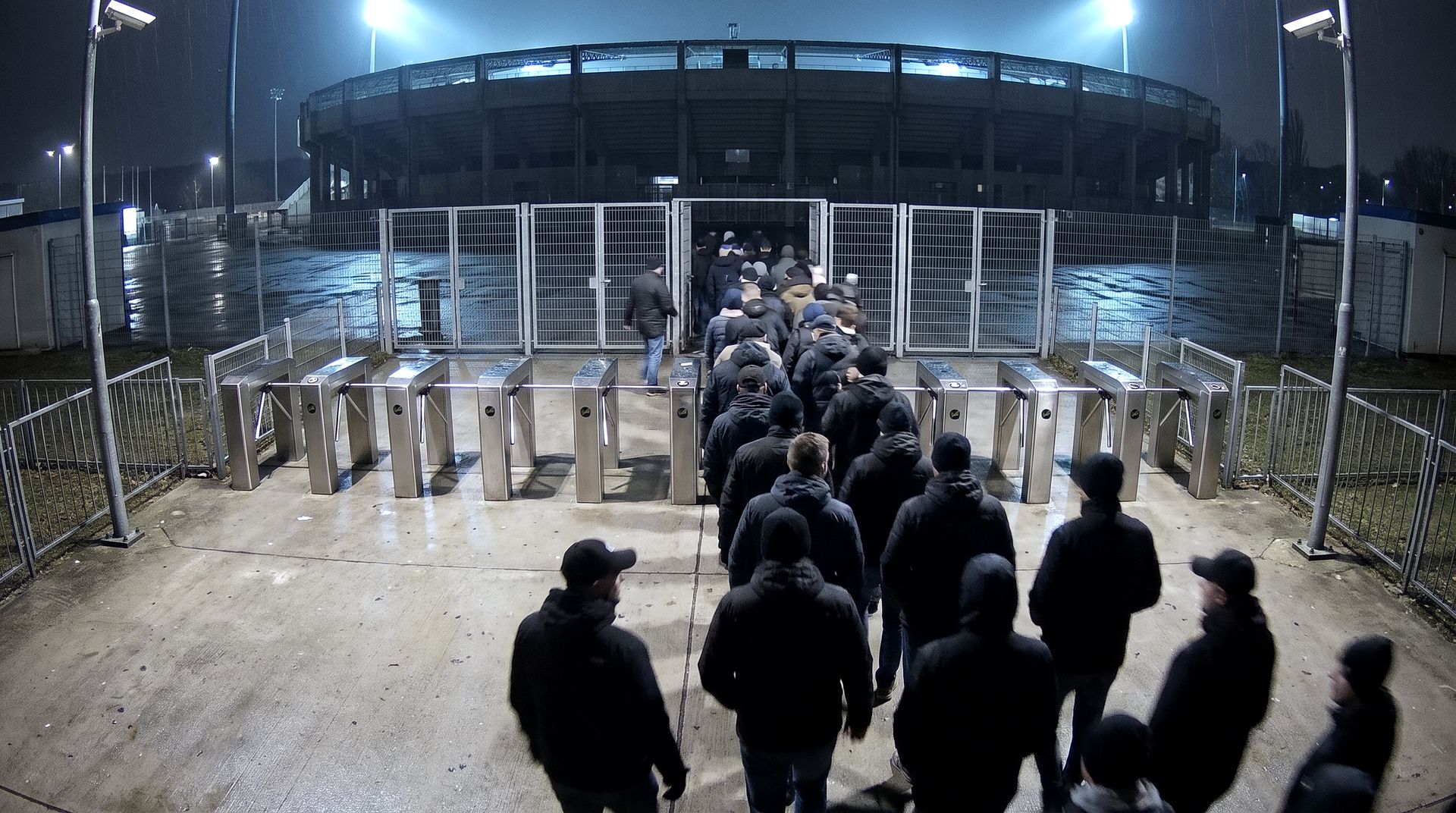
A safety officer's matchday starts hours before kick-off and ends long after the whistle. Gates open, queues build, concourses fill, the ground empties in fifteen minutes flat. Through all of it, dozens of cameras record faithfully while the control room can genuinely watch perhaps three or four at a time. The busiest moments of the day are exactly the moments when the most screens go unwatched.
Almost everything that goes wrong in a ground is visible before it happens. The crowd pressure at a turnstile builds over minutes, not seconds. The altercation in the stand has a shape before the first push. The person in medical trouble goes still while everyone around them keeps moving. The evidence is on camera. The problem is that nobody saw it live.
Archangel exists to close that gap: every connected camera watched at once, all day, with the moments that need human judgement brought to a human.
02 · Inside the ground
What does Archangel watch for inside the ground?
- Crowd pressure and surge at turnstiles, concourses and stairways, flagged while it builds rather than after it peaks
- Aggression forming in the stands, so stewards arrive at a flashpoint instead of a fight
- A person down or in distress on a concourse, in a stairwell or in a quiet corner of the ground
- Unattended bags and items in the places a busy crowd walks straight past
- Tailgating and forced entry at turnstiles and exit gates
- Restricted areas breached: pitch-side, back of house, plant rooms, roof access
- And behaviours as specific as a flare being readied or someone vaping in a stand
Every alert reaches your team in seconds with the camera, the location and a short clip, and every alert and response is logged. After the final whistle, the matchday record reads: we spotted it, we sent someone, here is the report.
03 · Outside the ground
What about the parts of matchday your cameras cannot see?
The first hour and the last hour of a matchday mostly happen outside the fixed camera estate: car parks, fan zones, approach roads, the walk to the station. A van idling where three hundred people are about to walk. A crowd bottleneck forming two streets from the ground. Your responsibility does not stop at the perimeter, and your eyes should not either.
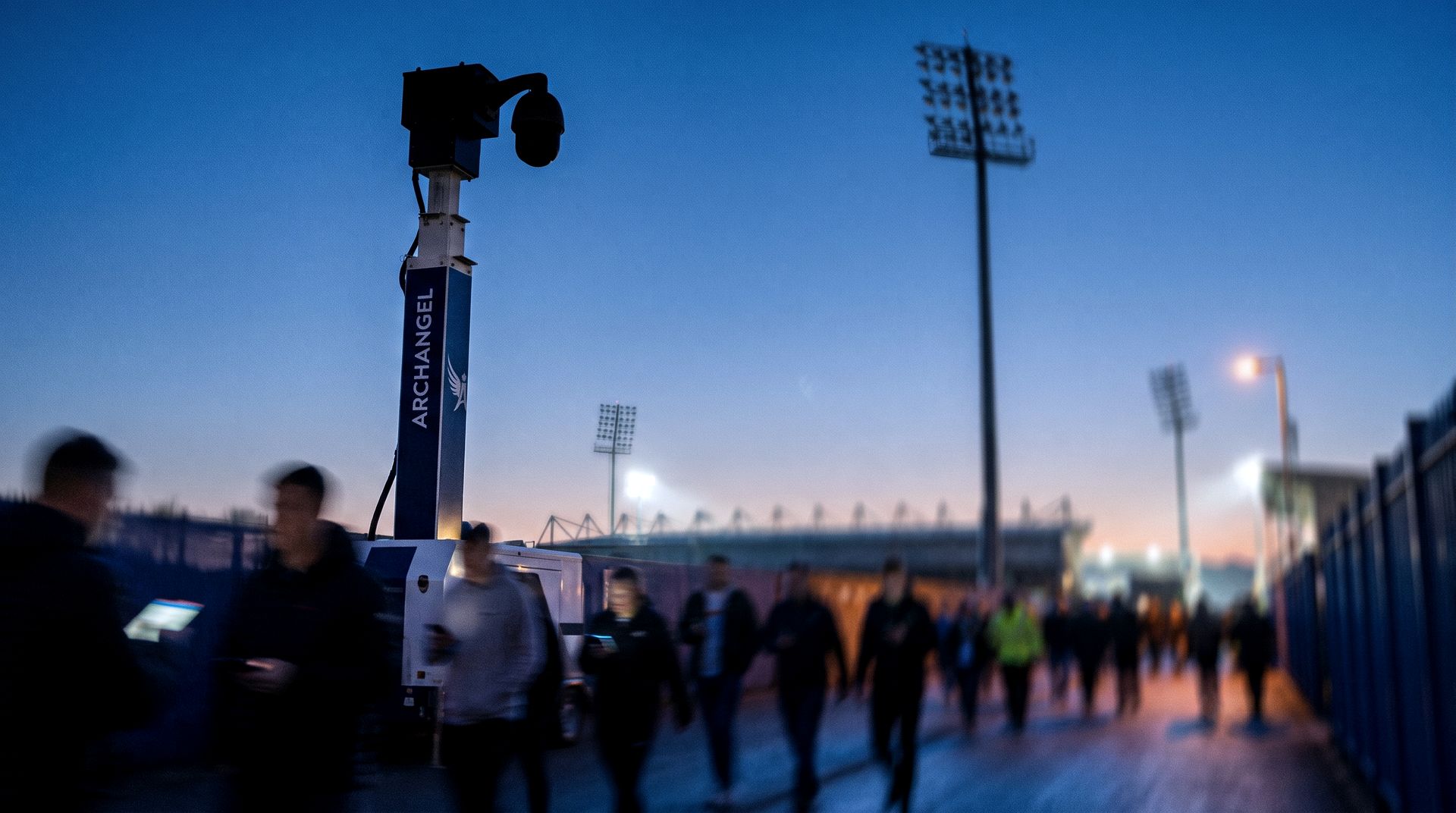
Archangel covers this with Zone X: rapid-deployment CCTV towers that carry the platform on board. Same detection layers, same alerts, same evidence trail, on ground your fixed cameras have never reached.
04 · Beyond football
Which sports and grounds is it built for?
The platform was proven on football, and the problems it watches for belong to every sport that gathers a crowd. If your venue has cameras, gates and thousands of people arriving at once, the same detection layers apply.
Football
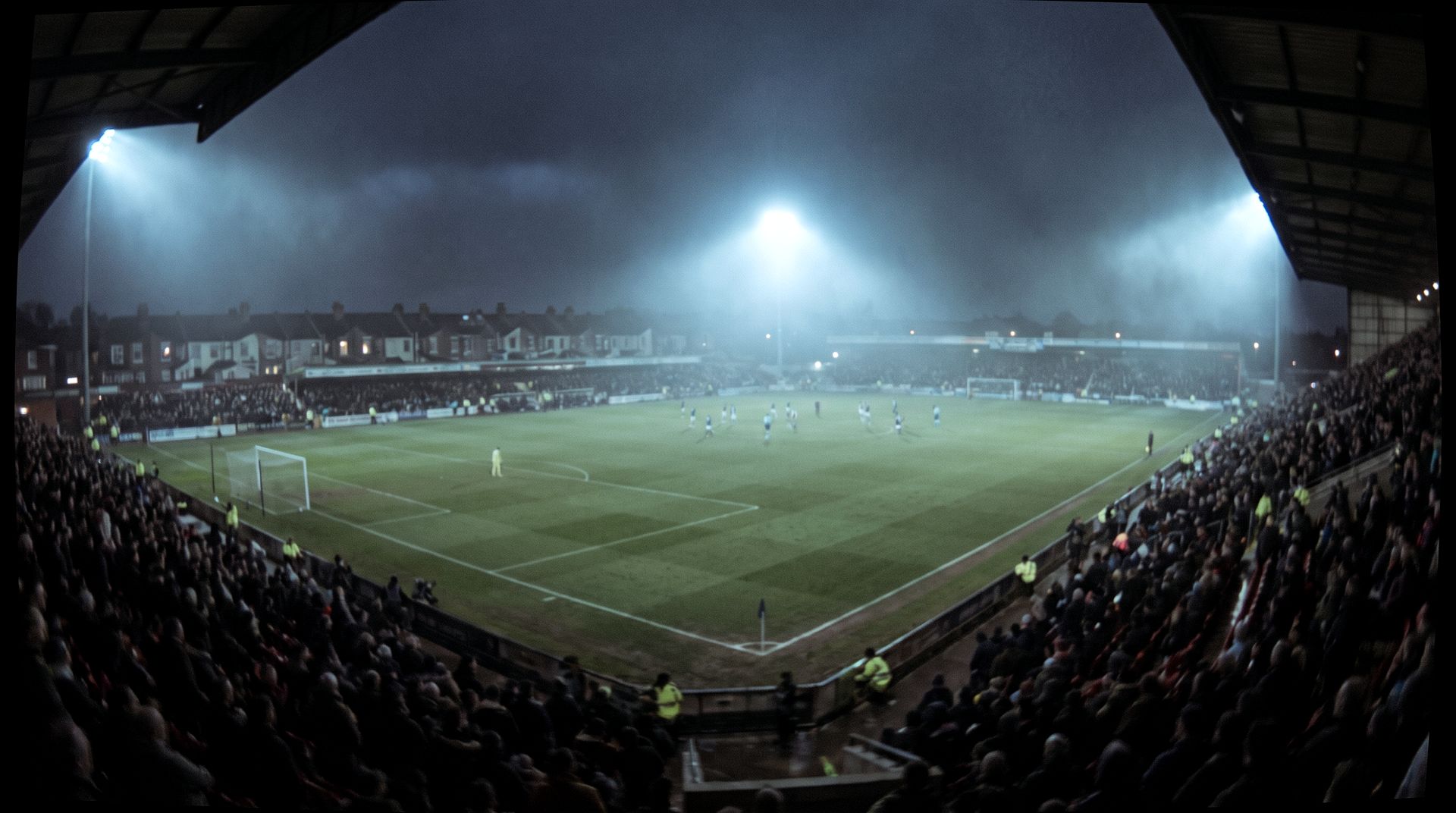
League and non-league grounds, from matchday ingress to the last train home. Live at Watford FC.
Rugby
Union and league grounds, where family crowds and standing terraces bring their own patterns.
Cricket
All-day occupancy, multiple stands, long slow ingress and concentrated egress.
Racecourses
Large open sites, hospitality areas, car parks and crowds that move all day.
Arenas and concerts
Stadium shows and arena events, where the crowd profile changes with every booking.
Fixtures at risk
High-profile matches where segregation, approach routes and egress need eyes everywhere at once.
05 · The regulatory clock
Does Martyn's Law apply to stadiums?
Yes, squarely. Sports grounds are qualifying premises under the Terrorism (Protection of Premises) Act 2025, and almost every stadium clears the enhanced tier threshold of 800 people. Enhanced tier venues must document proportionate protective measures across four categories and submit them to the SIA, and monitoring leads that list. The Act is expected in force in spring 2027.
A ground that can show its cameras are actively watched, its alerts are responded to and its responses are logged walks into that regime with its evidence already written.
Martyn's Law for sports grounds06 · Questions
Stadium questions, answered straight
Which football clubs use Archangel?
Archangel is live at Watford Football Club, running behaviour detection on the club's existing camera estate across matchdays, and further UK clubs have deployments underway. Club results stay with clubs, so we publish names only with their agreement, and every ground sees the platform prove itself on its own cameras before anything is signed.
How does AI CCTV help on a matchday?
A matchday safety operation runs for six hours or more, across dozens of cameras, with peaks at ingress and egress when no control room can watch everything at once. Archangel watches every connected camera simultaneously and flags what matters as it forms: crowd pressure building at a turnstile, aggression starting in a stand, a person down on a concourse, an unattended bag. Your safety officer gets the camera, the location and a clip in seconds, while there is still time to send a steward rather than write a report.
Does Archangel cover the area outside the ground?
Yes. The hours before and after the match happen in car parks, fan zones, approach routes and transport hubs, outside the reach of the fixed camera estate. Archangel calls this Zone X, and covers it with rapid-deployment CCTV towers that carry the platform on board, running the same detection layers and feeding the same alerts as the cameras inside the ground.
Does it work with the stadium cameras we already have?
Yes. Archangel is a software layer that connects to existing IP cameras through RTSP or ONVIF, with no new hardware inside the ground and no rewiring. A typical estate is live in under 48 hours. There is no facial recognition and no biometric data is stored.
Does Martyn's Law apply to stadiums and sports grounds?
Yes. Sports grounds are qualifying premises under the Terrorism (Protection of Premises) Act 2025, and almost any stadium sits in the enhanced tier, which starts at 800 people. Enhanced tier venues must document proportionate protective measures across four categories, and monitoring leads that list. The Act is expected to come into force in spring 2027.